
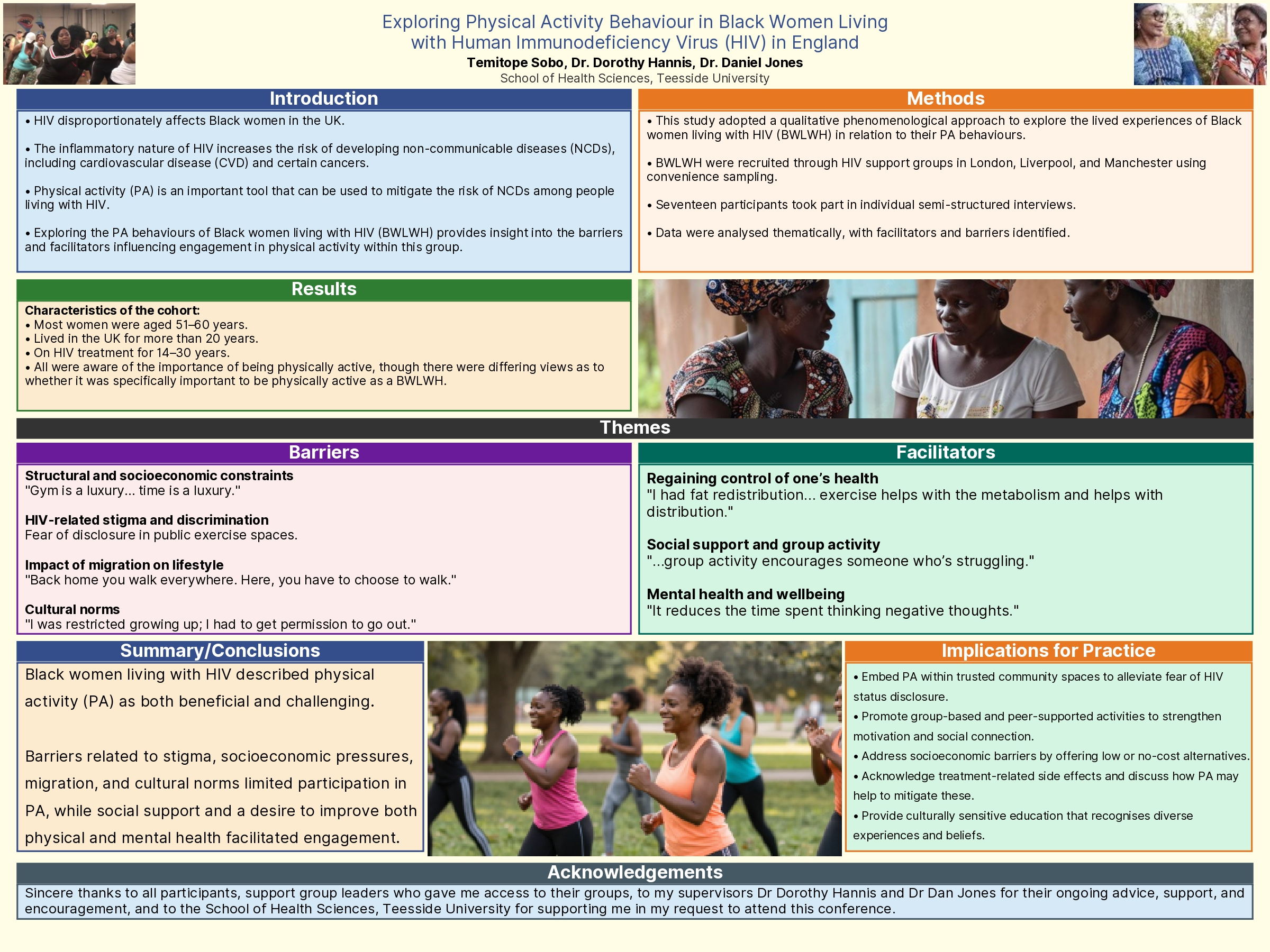
Physical activity is widely recognised as one of the most powerful tools for maintaining good health. But for Black women living with HIV (BWLWH) in England, staying active is far from straightforward. New research from Teesside University explores why — and what can be done about it.
Why This Matters
HIV disproportionately affects Black women in the UK. Beyond the virus itself, the inflammatory nature of HIV increases the risk of developing non-communicable diseases (NCDs) such as cardiovascular disease and certain cancers. Physical activity is a key way to reduce these risks — yet many Black women living with HIV face real and significant barriers to engaging in it.
About the Research
Conducted by Temitope Sobo, Dr. Dorothy Hannis, and Dr. Daniel Jones at the School of Health Sciences, Teesside University, this study used a qualitative phenomenological approach — meaning it focused on the lived experiences of the women themselves, in their own words.
Seventeen Black women living with HIV were recruited through HIV support groups in London, Liverpool, and Manchester and took part in individual semi-structured interviews. Most participants were aged 51–60 years, had lived in the UK for over 20 years, and had been on HIV treatment for between 14 and 30 years.
What the Women Said: Barriers to Physical Activity
All participants were aware of the importance of being physically active. However, several powerful barriers stood in the way.
Structural and Socioeconomic Pressures For many of the women, accessing exercise spaces was simply not affordable or practical.
“Gym is a luxury… time is a luxury.”
HIV-Related Stigma and Discrimination Fear of having their HIV status disclosed or discovered in public exercise spaces kept many women away from gyms and group fitness settings.
The Impact of Migration on Lifestyle Moving to the UK changed the women’s relationship with everyday physical movement in ways they hadn’t anticipated.
“Back home you walk everywhere. Here, you have to choose to walk.”
Cultural Norms For some women, cultural expectations around women’s freedom of movement had a lasting effect on how they engaged with physical activity.
“I was restricted growing up; I had to get permission to go out.”
What Helped: Facilitators of Physical Activity
Despite these barriers, the research also identified what motivated and supported the women to stay active.
Regaining Control of Their Health For some women, exercise became a way to reclaim agency over their bodies, particularly in managing HIV-related side effects such as fat redistribution.
“Exercise helps with the metabolism and helps with distribution.”
Social Support and Group Activity Being active alongside others made a significant difference.
“Group activity encourages someone who’s struggling.”
Mental Health and Wellbeing Physical activity offered an important emotional outlet.
“It reduces the time spent thinking negative thoughts.”
What Needs to Change: Implications for Practice
The research points to clear, practical steps that health professionals, community organisations, and service providers can take:
- Embed physical activity within trusted community spaces to remove the fear of HIV status disclosure
- Promote group-based and peer-supported activities to strengthen motivation and social connection
- Address socioeconomic barriers by offering low or no-cost alternatives to gym-based exercise
- Acknowledge treatment-related side effects and have open conversations about how physical activity can help manage them
- Provide culturally sensitive education that recognises the diverse backgrounds, experiences, and beliefs of Black women living with HIV
Final Thoughts
This research is a reminder that health is not just a personal choice — it is shaped by environment, culture, history, and circumstance. For Black women living with HIV, physical activity holds real potential to improve both physical and mental wellbeing. But to unlock that potential, the systems and spaces around them must be made more accessible, inclusive, and safe.
Research conducted by Temitope Sobo, Dr. Dorothy Hannis, and Dr. Daniel Jones, School of Health Sciences, Teesside University.
Let me know if you’d like this adjusted in tone, length, or formatted for a specific platform.

